On February 9, 2026, Southeast University helda signing ceremony in Nanjing to officially launch the international journal Engineering in Extreme Environments in partnership with Springer Nature.
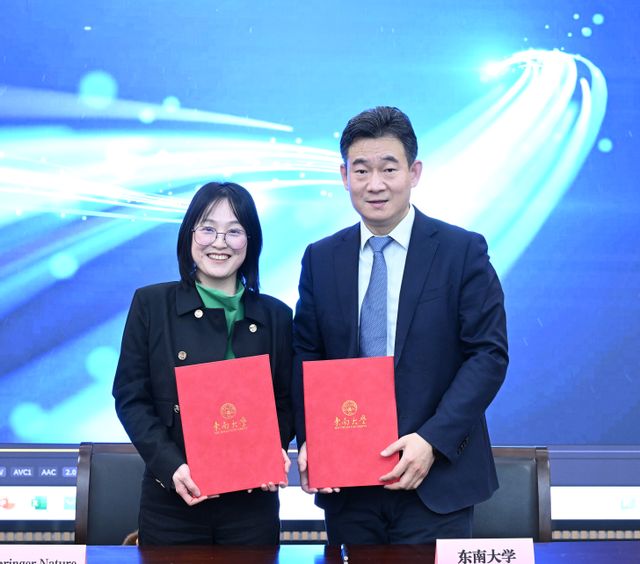
At the ceremony, Professor Guo Tong, Dean of the School of Civil Engineering, Southeast University, and Ms. Dong Zhiqiao, Senior Publishing Editor at Springer Nature, signed the cooperation agreement, marking the formal establishment of the journal. The two sides will collaborate to build a world-class academic publishing platform, providing strong support for scientific innovation and scholarly exchange in engineering in extreme environments.
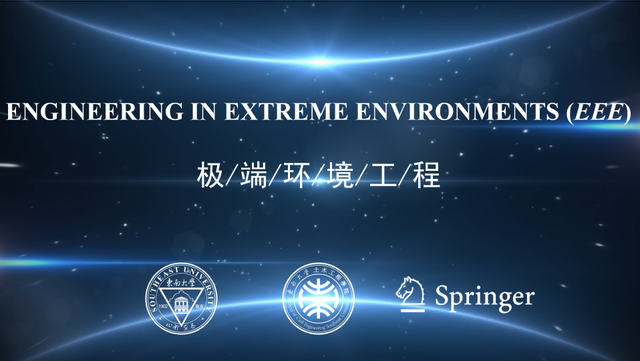
Engineering in Extreme Environments (ISSN 3120-4902; Chinese title:极端环境工程) is sponsored by the School of Civil Engineering, Southeast University, and will be published and distributed globally by Springer Nature. As a comprehensive academic journal in extreme-environment engineering, it aims to advance the design, analysis, and performance optimization of engineering systems under extreme physical conditions.
The journal’s Honorary Editor-in-Chief is Professor Sun Youhong, President of Southeast University. The Editors-in-Chief are Professor Guo Tong (Chief Professor, Southeast University), Professor Ranjith Pathegama Gamage (Chair Professor, Monash University), and Professor Frank Cheng (University of Calgary). The editorial board brings together internationally renowned scholars from China, the United States, Australia, Canada, and other countries and regions, forming a high-caliber, interdisciplinary, and global team.
The launch of the journal aligns with global development trends, addresses shared challenges facing humanity, and responds closely to major national strategic needs. Today, countries around the world are actively advancing frontier endeavors such as polar research, deep-sea exploration, deep-earth engineering, and space engineering. Meanwhile, climate change is exposing more regions to harsh and extreme conditions. From the construction of Antarctic research stations to deep-sea resource development, from plateau railway projects to the operation and maintenance of space infrastructure, engineering in extreme environments has become a strategic high ground in global scientific and technological competition.
China is actively advancing major strategies in polar research, deep-sea exploration, deep-earth engineering, and space engineering, achieving internationally recognized progress in areas such as Antarctic station construction, deep-sea resource development, deep-buried tunnel projects including the Sichuan–Tibet Railway, and space station development. The launch of Engineering in Extreme Environments will provide a global platform for academic exchange, facilitate the sharing of engineering experience and international technical cooperation, and promote breakthroughs in both fundamental theories and engineering technologies. The journal will not only support China’s major national strategies, but also help the international community address extreme-environment challenges, contributing Chinese expertise and solutions to sustainable development.
The journal focuses on engineering innovations and breakthroughs in extreme environments, including (but not limited to) the Arctic/Antarctic, deep sea, deep earth, outer space, high-altitude regions, deserts, nuclear facilities, offshore platforms, volcanic areas, and disaster-affected zones. Key areas of interest include: Structural design and integrity under extreme loads; Thermal–fluid systems in extreme temperature conditions; Propulsion, dynamics, and control systems; Material selection and durability; Sensing and communication systems; Life-support engineering; Risk assessment and resilience management. The journal welcomes a wide range of submissions, including original research articles, review papers, rapid communications, and research briefs.
Traditionally, research in extreme-environment engineering has been scattered across specialized journals in cold-region science, ocean engineering, geotechnical engineering, aerospace, and related fields. Engineering in Extreme Environments innovatively brings together engineering research across all extreme environments—polar regions, deep sea, deep earth, and space—on a single platform, enabling cross-environment knowledge integration and technology transfer, and driving systematic innovation in the discipline.
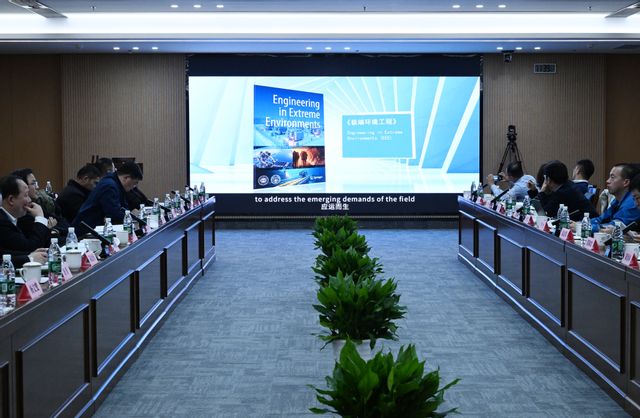
The journal launch was witnessed by Professor Sun Youhong (President, Southeast University), and a wide range of distinguished experts including Professor Liu Jiaping (Xi’an University of Architecture and Technology), Professor Ding Lieyun (Huazhong University of Science and Technology), Professor Yue Qingrui (University of Science and Technology Beijing), Professor Li Huajun (Ocean University of China), Professor Wang Mingyang (Army Engineering University), and experts from Southeast University, Tsinghua University, Dalian University of Technology, Xiamen University, Tianjin University, the National Antarctic Expedition Training Base, the Polar Research Institute of China, and other universities, research institutes, and leading enterprises—more than 60 participants in total from extreme-environment engineering and related interdisciplinary fields.
The launch of Engineering in Extreme Environments marks a new stage for research in this field. Upholding the editorial philosophy of “Excellence, Innovation, Openness, and Inclusiveness,” the journal will bring together global wisdom, promote international collaboration, and provide a high-level platform for researchers worldwide—offering strong scientific support for exploring extreme environments, addressing global challenges, serving major national strategies, and advancing global technological progress and sustainable development.