The Cable-Driven Pulley Maintenance System Design for the FAST Project, undertaken by the team led by Professor Guo Zhengxing and Associate Professor Zhu Mingliang, received high praise from the National Astronomical Observatory of the Chinese Academy of Sciences after passing expert reviews. On September 9, 2024, the procurement and installation of the cable-driven pulley maintenance system successfully passed the acceptance meeting organized by the National Astronomical Observatory, marking the complete installation of the system. Recently, following a month-long trial operation, the system has met its expected performance and is officially in use. This innovation demonstrates the broad application prospects of intelligent construction technology in large-scale scientific engineering, providing strong support for the development of radio astronomy in China.
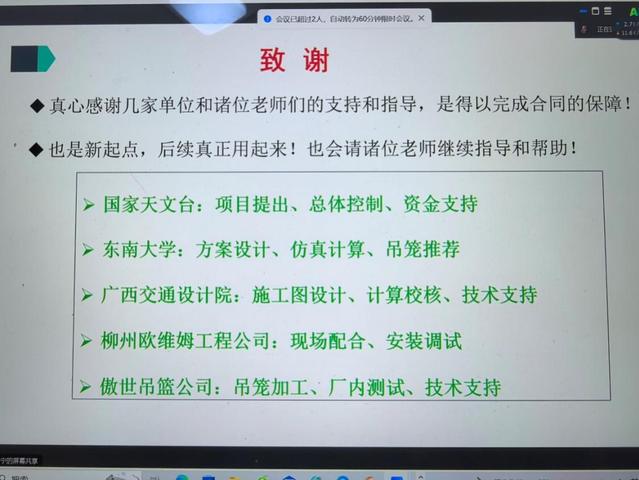
Fig.1 Project Acceptance (Online)
To address the challenges of high-altitude maintenance for the cable-driven pulley system in the FAST project, Professor Guo Zhengxing and Associate Professor Zhu Mingliang from the School of Civil Engineering at Southeast University proposed an innovative, controllable full-scene maintenance basket in collaboration with the National Astronomical Observatory. Starting from early 2023, the team overcame challenges such as the lack of a construction platform, large spans, and the absence of precedents. By utilizing an intelligent control system, they achieved precise operations of the maintenance basket at heights exceeding 200 meters, breaking through multiple technical obstacles and enabling maintenance operations between different cable-driven systems, significantly enhancing the safety and efficiency of maintenance work and providing an efficient and convenient solution for the routine maintenance of the FAST telescope.
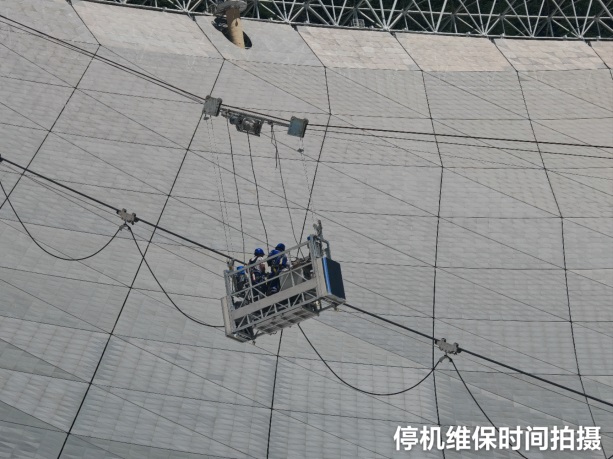
Fig.2 Intelligent and controllable full scene maintenance basket
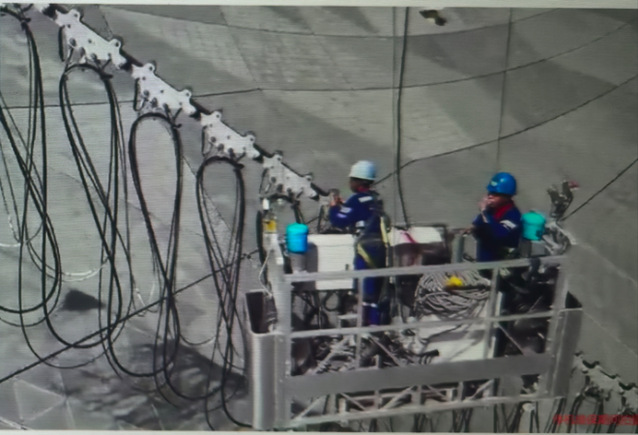
Fig.3. Actual operation diagram of the suspended basket system
The FAST (Five-hundred-meter Aperture Spherical Telescope) is the world's largest and most sensitive radio telescope, led by the National Astronomical Observatory of the Chinese Academy of Sciences, and was completed and put into operation in September 2016. In December 2016, the National Astronomical Observatory expressed gratitude to Professor Guo Zhengxing and Professor Luo Bin from our university for their significant contributions to the preliminary research of the cable net engineering, participation in the development of high-performance steel cables, and assistance in solving the technical challenges of installing the large-span cable net. Since its operational launch, Professor Guo Zhengxing and Associate Professor Zhu Mingliang's team at Southeast University has maintained close collaboration with the National Astronomical Observatory, providing ongoing technical support for the project’s research and operation. To achieve high-precision positioning of the telescope, the project's feed cabin employs a six-cable driven mechanism, allowing the 30-ton feed cabin to move within a range of approximately 140 meters at an altitude of about 200 meters, enabling preliminary tracking of astronomical trajectories and initial positioning of the feed receiver's pose inside the cabin. However, the cable-driven steel cables, pulleys, cables, and traction ropes have been exposed to high altitudes for extended periods, making accessibility for personnel difficult and complicating equipment inspection and maintenance, which presents significant challenges. The team led by Professor Guo Zhengxing and Associate Professor Zhu Mingliang has utilized intelligent construction technology to facilitate innovative breakthroughs in high-altitude maintenance, fully supporting the development of China's large-scale scientific engineering and receiving high recognition and unanimous praise from both industry insiders and the public.
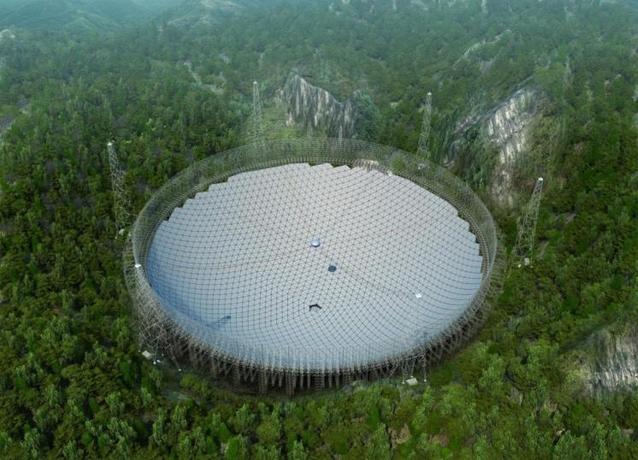
Fig.4. Overall Plan for FAST Project
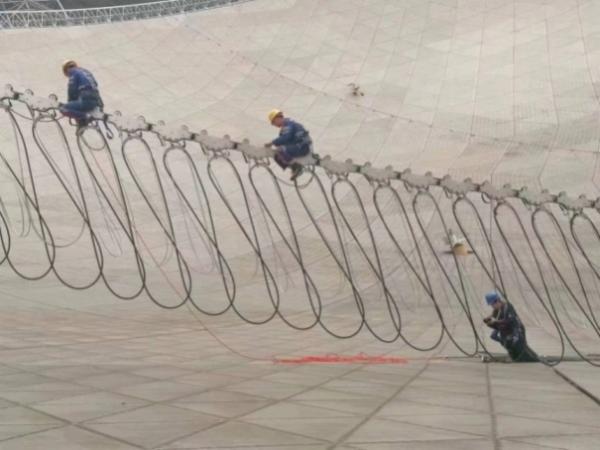
Fig.5. The Cable-Driven Pulley Maintenance System