News from Lisbon, Portugal on June 17th: At the just-concluded fib Symposium 2021, an international academic conference organized by the International Federation for Structural Concrete (fib), Professor Pan Jinlong's research team from our school, in collaboration with Assistant Professor Mladena Lukovic's research team from Delft University of Technology in the Netherlands, achieved remarkable results in the Concrete Structure Numerical Simulation International Competition. The TUD-SLM team (Gu Dawei, Shozab Mustafa) secured the 1st place, while the SEU-SM team (Jiang Bo, Li Guanhua, Qian Zhenxu) secured the 8th place.
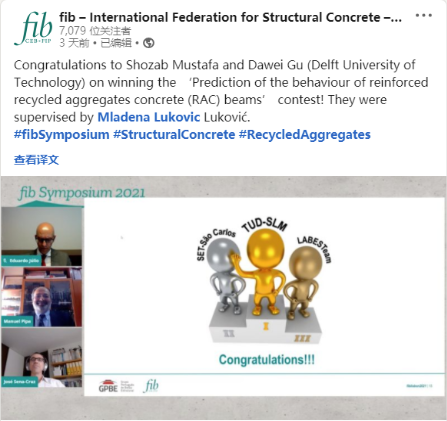
Fig.1. Official tweet of fib competition results
The fib Symposium 2021, a large-scale academic conference hosted by the International Federation for Structural Concrete (fib), attracted 23 teams from 12 countries with 80 participants for this international competition. The competition focused on predicting the mechanical behavior of reinforced recycled aggregate concrete beams. The competition process included theoretical analysis or numerical simulation within a specified time, submission of analysis reports, loading tests of concrete beams, and scoring based on the test results. Evaluation criteria included predictions of beam carrying capacity, deformation, crack width, energy consumption, and the quality of written reports.
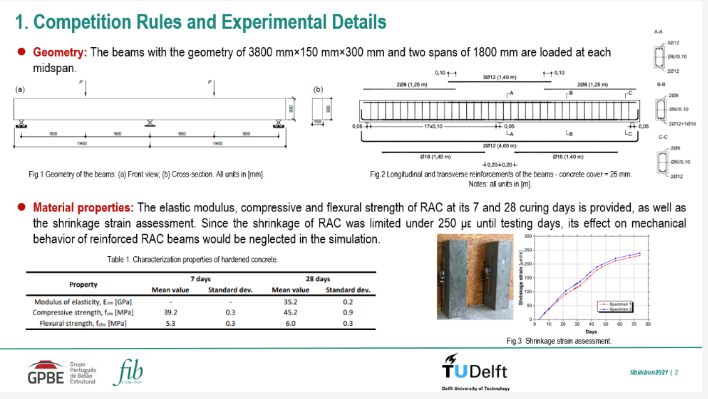
Fig.2. The topic of this competition
The TUD-SLM team, composed of our doctoral student Gu Dawei (jointly supervised by Southeast University and Delft University of Technology) and Delft University doctoral student Shozab Mustafa, utilized the self-developed TUD Lattice Model to achieve accurate predictions in various aspects. The model, proposed by Professor Erik Schlangen from Delft University of Technology, is primarily used to simulate the fracture behavior of cement-based materials at a microscopic scale.
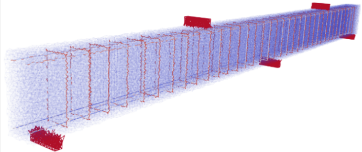
Fig.3. Three-dimensional model of reinforced concrete beam established using Delft lattice model
During the joint training period at Delft University of Technology, doctoral student Gu Dawei and Shozab Mustafa, under the guidance of Professor Erik Schlangen and Assistant Professor Mladena Lukovic, improved the model and successfully applied the model to the numerical simulation of macroscopic reinforced concrete components, making a significant breakthrough in the field of lattice models.
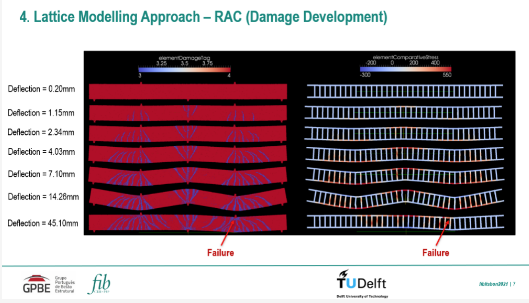
Fig.4. Lattice model crack prediction results
Additionally, the SEU-SM team, consisting of our doctoral student Jiang Bo, master's student Li Guanhua, and Qian Zhenxu, achieved significant results using the ABAQUS software in aspects such as peak load capacity, peak displacement, and deflection.
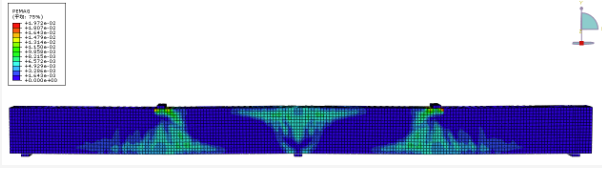
Fig.5. Lattice model crack prediction results
The outstanding performance of our school's students in this competition highlights the spirit of teamwork, further enhances the international influence of Southeast University's civil engineering discipline, and provides new ideas and approaches for the numerical analysis of concrete structures.